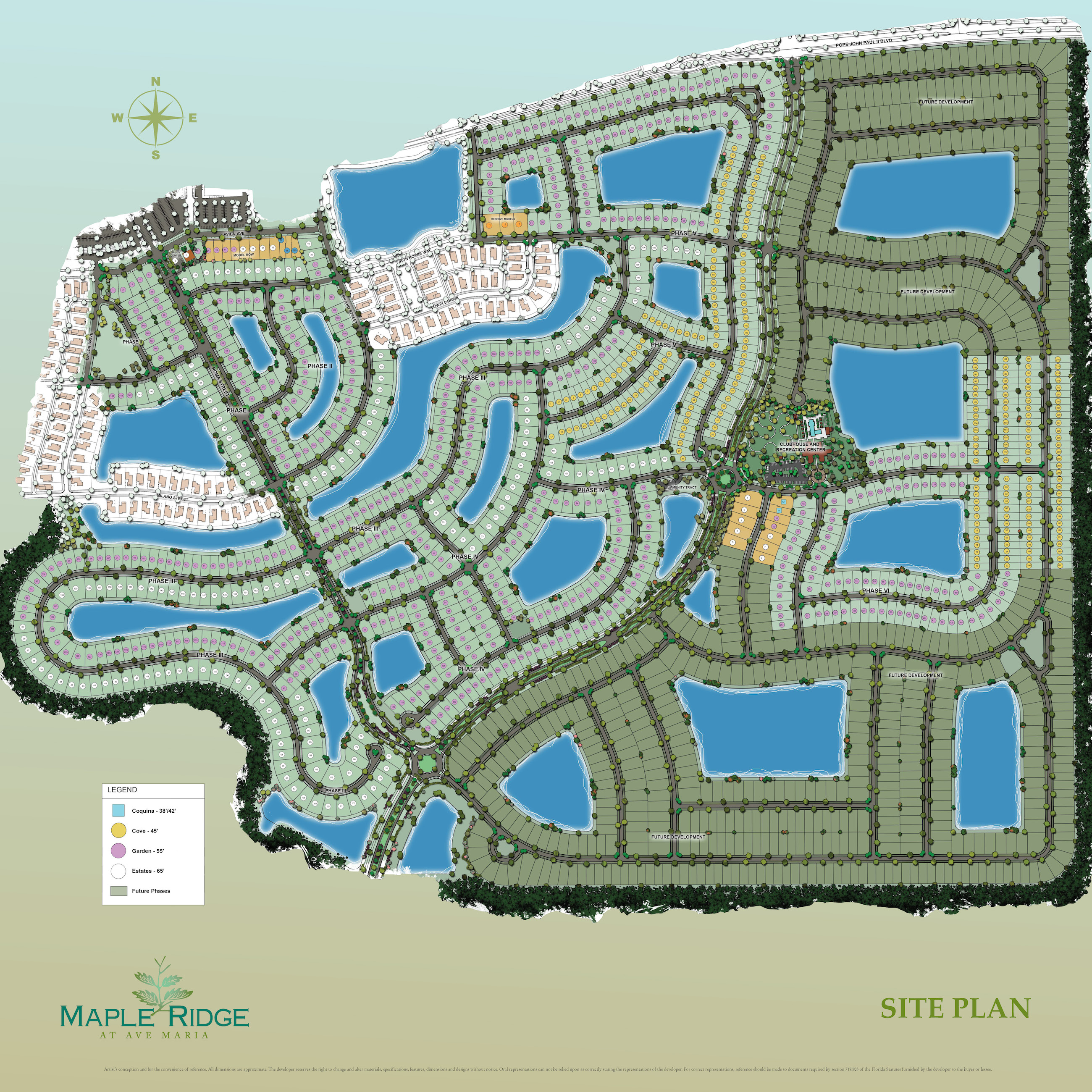
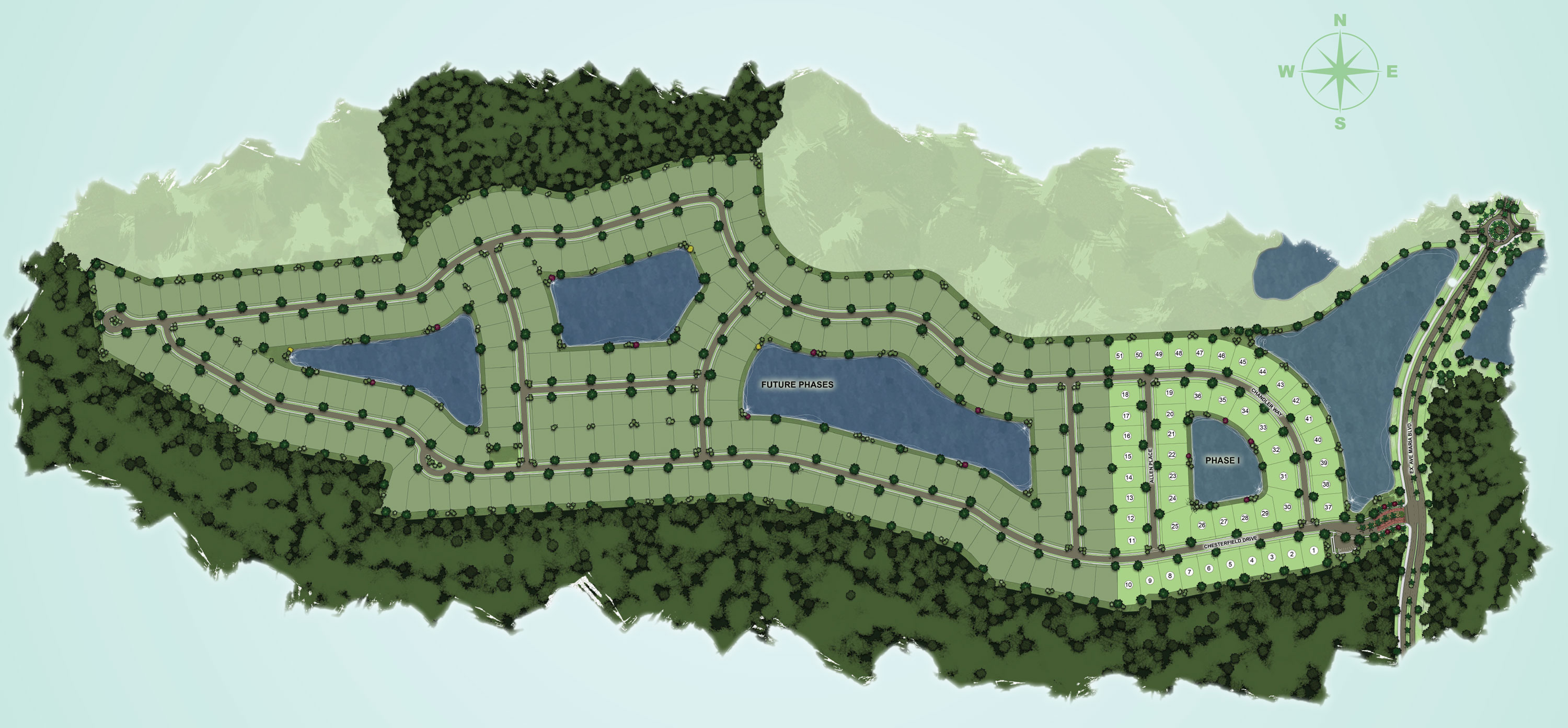
As many of you know, there is literally a new town on the horizon. The new town is called Ave Maria; and, it is a town unlike any other town in history. Many of us have heard of or thought of the idea of a town centered on a Church, where all life and activity has the right sense of the Divine at its center (see Thomas Merton quote). We feel that this is something often lacking in this day and age; but, we just cannot place our finger on what it is or why it ended up this way. Where there is a basic need, man eventually attempts to build it.
Ave Maria is already radically unique because of the concept of building a planned city and university from the ground up. It is currently the largest construction site in the country. Nowhere in history do you find such an undertaking. Usually in a college town, the town comes first or the college; but a college town built all in one! Its the product of rooted inspiration coupled with the modern need for comprehensive planning.
"Ave," as the students have already decided its nickname, is a university town of excellence, already being built in the hearts of people. No amount of concrete or colored paint can cause this vision to take place. But the intentions and the vision of the founder, along with the hearts of all those who share in it. This is what makes it the town of Ave Maria.
By LIAM DILLON, Naples Daily News, Thursday, May 8, 2008
The new kid on the block is getting much larger.
Ave Maria University expects to increase its undergraduate enrollment by as much as 60 percent next year. Projected enrollment for 2008-09 — the university’s fifth year and second at its permanent campus in eastern Collier County — is between 600 and 700 students, an estimate based on 340 new students who have put down deposits for next year, according to Michael Williams, Ave Maria’s director of admissions.
The university, funded primarily by former Domino’s Pizza magnate Tom Monaghan, has greatly expanded enrollment while sustaining academic standards, such as incoming students’ average SAT scores.
College admissions experts are bullish about the university’s numbers and ability to maintain its academic levels. If Ave Maria’s numbers are accurate, then “they have done a remarkable job of targeting Catholic families,” said Don Hossler, an education professor at the University of Indiana who has written extensively about college admissions.
Tim Brunold, the University of Southern California’s director of undergraduate admissions, called Ave Maria’s statistics “pretty promising.” “Their numbers look pretty good to me based on the fact that they’re so new,” Brunold said.
For now, it appears much of the university’s admissions strategy involves throwing around various amounts of cash and smartly promoting that fact. Other Catholic schools have taken note.
“I think we’re priced as the best value in Catholic education,” Williams said.
Financial aid is best understood through the university’s “discount rate” or the percentage off tuition a school can offer to its entire incoming class. Ave Maria has a discount rate of 35 percent. That allows the school to divide need- and merit-based scholarships among incoming students by up to 35 percent of the school’s total tuition dollars.
Merit scholarships are the primary selling point in the school’s direct mail campaign that began this year. The school purchased a list of SAT scores matching the kind of student it wanted to attract: those with scores between 1,850-2,100 and a self-reported interest in Catholic liberal arts colleges and programs.
Ave Maria then sent out approximately 25,000 letters addressed “To the parents of” each student with an enticing offer: It states the student is “eligible to receive an academic scholarship to attend Ave Maria University.” A smaller mailing went out to parents of students who took the ACT.
Williams said the school received 200 new applications in a week after the SAT mass mailing.
Direct mail that focuses on potential financial savings is critical for a school that is looking to build itself a name, Brunold said.
“Talking aggressively about scholarships is a great way to get people’s attention,” he added.
The university’s financial aggressiveness continues once prospective students are admitted. Accepted students receive a $200 travel voucher to visit the school. Once they arrive, Williams said the school provides a “concierge” service. The school picks up prospective students at the airport, current students host the prospects in their rooms and professors allow the visitors into their classrooms.
Williams said he is aware of the importance of instilling a “pioneering” spirit in new students. Current students repeatedly mention being there at the start of the Ave Maria enterprise as a major attraction to the school.
By LIAM DILLON, Naples Daily News, Thursday, June 19, 2008
Ave Maria University received long- awaited recognition Thursday, gaining full accreditation from a national agency.
The American Academy of Liberal Education, a Washington D.C.-based organization, granted the Collier County university its final approval after its board met earlier this month.
“We think they have a lot of promise,” AALE Vice President Jeff Martineau said.
University founder Tom Monaghan “wanted to start a new kind of institution that he didn’t think existed anywhere,” Martineau said. “We think in five to 10 to 20 years, they do have a chance to create a unique Catholic liberal arts curriculum.”
Accreditation is a significant benchmark for a school’s legitimacy. Ave Maria’s recognition with the AALE secures the school’s access to billions in federal financial aid funding. Accreditation also ensures credits transfer between schools and provides a standard for employers and graduate programs to accept a school’s degree.
AALE’s eventual approval of Ave Maria was of little doubt — AALE President Jeffrey Wallin said last November he expected Ave Maria to receive full accreditation — but Ave Maria officials were still overjoyed by the news.
“It means a great deal, I would say almost psychologically,” University President Nick Healy said. “We know what kind of quality education and programs we offer, but the system requires that they are evaluated by a third party with all their policies and procedures. It’s very gratifying to have an agency tell you what you already know.”
AALE’s recognition includes the school’ s branch campus in Nicaragua, known as Ave Maria University-Latin American Campus. But Martineau said his organization planned a separate review of that campus, specifically through a site visit, in the fall. AALE has visited the Nicaragua campus in the past, but not in the past year, Martineau said.
“It’s still our policy to evaluate each branch campus,” Martineau said.
Ave Maria has also applied for accreditation with a large regional agency, Southern Association of Colleges and Schools. SACS recognizes Florida Gulf Coast University, Edison College and Hodges University, among other schools in the Southeast United States. Healy said he anticipated SACS would make a formal site visit to Ave Maria this fall. A SACS vice president said last month a decision on Ave Maria’ s candidacy status with the organization could come as soon as December.
AALE is a small agency that accredits 21 liberal arts domestic and foreign institutions and programs, Martineau said. The agency has had difficulties of late with federal regulators, and those problems forced a delay to its final decision about Ave Maria, AALE officials said. In spring 2007, its recognition — and access to federal funding — from the U.S. Department of Education was threatened in a letter from Department Secretary Margaret Spellings. But in December, a Department of Education committee postponed a final decision on AALE for another year.